

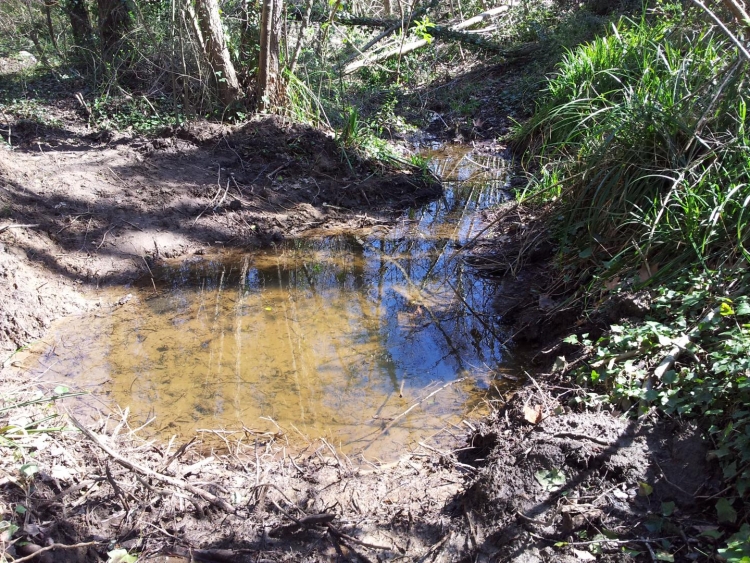
The Consorci del Ter creates small wetlands at the Lower Ter River and at Llémena River to recover populations of European Pond Turtles and other reptiles and amphibians


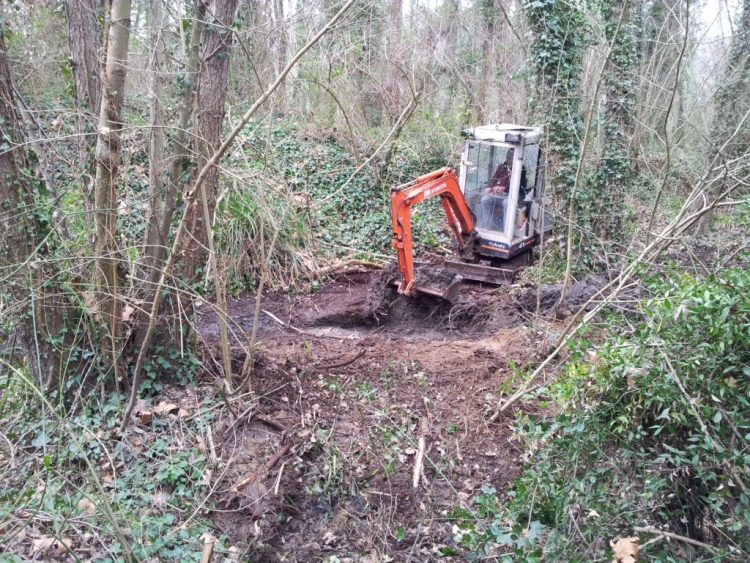
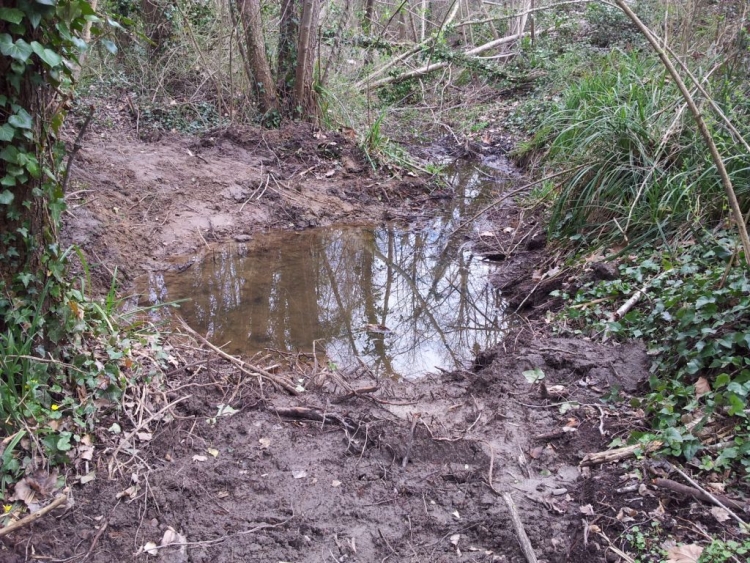
The action is part of the project funded by the European Commission LIFE Potamo Fauna and accompanied the release of 150 turtles bred in captivity
During last winter in the framework of the LIFE Potamo Fauna "Conservation of river fauna of Community interest in the Natura 2000 network sites of the Ter, Fluvià and Muga river basins" 12 ephemeral small wetlands have been created and 12 Mediterranean temporary ponds (3170 * -Annex I of the Habitats Directive) in the area of the Natura 2000 network of Lower Ter, a Site of Community Importance "Banks of the Lower Ter (ES5120011)" and the mouth of the "River Llémena (ES5120020)" in order to constitute a suitable habitat for amphibians and reptiles. This action has been coordinated by the Consorci del Ter.
The specific objective is that these small ponds will be useful for the recovery of populations of European Pond Turtle (Emys orbicularis) and the improvement of the populations of other species of herpetofauna of European interest such as the Mediterranean Turtles (Mauremys leprosa), the Marbled Newt (Triturus marmoratus), the Common Midwife Toad (Alytes obstetricans), the Western Spadefoot Toad (Pelobates cultripes), the Natterjack Toad (Bufo calamita) and the Mediterranean Tree Frog (Hyla meridionalis). Some European Pond Turtles individuals will be released from a captive breeding program run by the Turtle Breeding Centre in Albera (CRT). It is expected to release 150 individuals in 2017. The main cause of decline and fragmentation of populations of these species is due to the disappearance of this type of habitat, the Mediterranean temporary ponds, and the progressive consolidation of the river on a single channel or river arm increasingly narrow habitats and mostly running water. For this reason it is considered essential the recovery of small temporary flood zones associated with fluvial dynamics, but independent of the ordinary main course (low water). The temporary ponds are semi aquatic habitats characterized by alternating dry and wet phases.
The actions are located in the municipalities of Anglès, Bescanó and Sant Gregori, in areas of public water or other public owned lands, and upstream from the city of Girona. The coming winter new pools in river sections located downstream of Girona will be created. In total, in 2016, 24 new ponds will have been created, all of them with less than 50 square meters and less than one meter, so that, shallow ponds.
We note that during the course of the river Ter numerous wetland areas previously existed, consisting of variable length widespread flooding in times of flooding, in addition to lakes, temporary or permanent, often associated with old river bed itself. As the river has lost its natural river dynamics, resulting from the various hydraulic management, especially large dams located in the middle, and also the result of the progressive reduction of discharges and the largest decrease consumption water, wetlands have disappeared gradually. The river flows with one arm and makes impossible the natural recovery of oxbows, the natural creation of new ponds, as well as the renewal of riparian forest.
For these reasons, regressive trends have been observed for many characteristic species of the river environment at all stages of Ter River. The causes of this decline are numerous, from the persecution, exploitation (hunting and fishing) or direct collection, but also the introduction of exotic animal species, and the reduction and degradation of their habitats.
LIFE Potamo Fauna has an overall budget of 1.9 billion euros, 50% funded by the European Union. Between 2014 and 2017 Potamo Fauna acted in 11 Natura 2000 areas in the province of Girona recovering and preserving long-term several endangered species. The project carries out reinforcements population and improvements of habitats of species as the native river crayfish or several naiads, fish, amphibians and turtles. The project has also enabled to consolidate a team of 24 people for four years.
The Consorci de l’Estany acts as a coordinating beneficiary and the associated beneficiaries are Consorci del Ter, Generalitat de Catalunya thought the Departament d’Agricultura, Ramaderia, Pesca, Alimentació i Medi Natural, Forestal Catalana SA, the Amics de la Tortuga de l’Albera and the Universidad del País Vasco-Euskal Herriko Unibertsitatea. As co-financers the city councils Ajuntaments de Banyoles and Porqueres, and also the Diputació de Girona, Aigües de Banyoles, SAU and the Consorci Esportiu de l’Estany de Banyoles.